Key takeaways: Your ideal protein intake depends on your metabolic profile and activity level: while 0.83g/kg/day is sufficient for a sedentary adult, this requirement rises to 1.2g for seniors and up to 2.5g for intense athletes. Optimize your vitality by varying animal and plant-based sources while protecting your kidneys. Discover our tips for optimizing your protein intake.
Proteins are the fundamental building blocks of our body, accounting for 10% to 15% of our total energy intake to ensure the renewal of our tissues and hormones. Yet, between the needs of a high-level athlete and those of a sedentary adult, there is often uncertainty about the precise dose to put on one's plate. You are likely wondering if your current consumption really supports your vitality or if it is unnecessarily overloading your metabolism. This article answers the question of how many grams of protein per day are necessary to optimize your health and skin radiance according to your specific profile. You will discover how to adjust your intake to protect your muscle mass and boost your energy sustainably through a balanced Inside/Out nutritional approach.
Summary
Determine how many grams of protein per day are necessary for your balance
The reference intake is set at 0.83g/kg/day for a sedentary adult, or 10% to 20% of total calories, but climbs to 1g/kg for seniors to maintain muscle density. This recommendation highlights the importance of adjusting your intake according to your biological profile and current lifestyle.
The standard 0.8g per kilo benchmark for a sedentary lifestyle
For a less active adult, science establishes a minimum baseline. This figure ensures cellular renewal without overloading the body: it is a safety measure. Break down the calculation by multiplying your weight by 0.8 — a 60kg woman therefore needs 48g daily. This represents about 15% of your calories, and overall nutritional balance depends on this fair proportion for lasting vitality. Precision here prevents invisible deficiencies.
To refine your knowledge, consult the Anses recommendations on proteins.
The evolution of nutritional needs over the years
With age, the body assimilates amino acids less effectively: the dose must then be increased to protect muscles, and a sedentary lifestyle exacerbates this need for compensation. Pregnancy and breastfeeding also require a surplus, as the body is building life and drawing on its reserves. The quality of intake then becomes a priority. Prioritize nutritional density over volume: a small, nutrient-rich food is better than a large plate devoid of nutrients.
You can consult this INRAE study on seniors to delve deeper into the subject.
Adjust your intake according to the intensity of your physical activity
While the baseline is suitable at rest, your sports sessions change the metabolic situation radically.
Specific requirements for endurance and strength disciplines
Running a marathon or lifting weights does not require the same fuel: endurance consumes energy, strength breaks down fibers. Adapt your plate to your effort. Proteins repair the micro-tears created by intense exercise; without them, recovery stagnates. Strength athletes often aim for 1.6 to 2.2g/kg to support muscle mass, while for endurance, 1.2 to 1.6g/kg is generally sufficient. The quality of the ingested active ingredients is more important than the simple raw quantity consumed.
A global approach promotes skin and muscle longevity. Your microbiome appreciates this nutritional rigor, and precise management of your daily needs is the starting point for chosen longevity.
Metabolic window and post-effort recovery
We often talk about a thirty-minute window after sports. In reality, your body remains receptive for much longer: don't stress about perfect timing. Protein synthesis occurs over twenty-four hours, and meal consistency counts more than an immediate shake. View your nutrition as a continuous flow.
Recovery is not limited to what you eat, but includes the quality of your overall rest.
Never forget water and sleep. These pillars complete the action of nutrients, and rested skin reflects good recovery.
Prioritize the quality of sources for optimal longevity
Beyond the numbers, it is the origin of your nutrients that determines your future vitality.
Comparison between animal proteins and plant-based alternatives
Meat offers all amino acids at once, while plant-based sources require more strategy to be complete. Both sources have their place in your routine. Combine rice and lentils to obtain a perfect profile: this complementarity is the key to meat-free diets—simple, effective, and very digestible. Choose certified organic products to avoid chemical residues, as the purity of the food directly impacts your health.
It is useful to know everything about proteins to adapt your choices according to your needs.
Impact of dietary diversity on your microbiome
Varying your sources nourishes your intestinal flora: each plant provides specific, highly appreciated fibers. A diverse microbiome is the guardian of your immunity. Legumes are fantastic natural prebiotics: they promote the development of good bacteria, your digestion becomes smoother and lighter, and it is a virtuous circle for your well-being. The Inside/Out approach begins on your plate, and balanced flora shows immediately on your face.
| Source | Main Benefit | Microbiome Impact |
|---|---|---|
| Legumes | Fiber | Prebiotic effect |
| Organic cereals | Energy | Bacterial diversity |
| Small fish | Omega 3s | Global support |
| Oilseeds | Minerals | Flora balance |
Strategies for effective daily assimilation
Eating the right things is a start, but knowing when to consume them optimizes every bite.
Dose distribution to maximize protein synthesis
Don't eat your entire quota in the evening: spread your intake across breakfast and lunch, as your body handles small, regular doses better. The intestine saturates beyond 30g per intake, and the surplus is often wasted by the body. Aim for balance at every meal. An afternoon snack prevents the energy slump: a few almonds or a plant-based yogurt are enough to stabilize your blood sugar and energy levels.
To go further, discover which foods to prioritize to boost your energy daily.
Role of hydration and digestion in the process
Digesting protein requires a lot of water for your kidneys: drink more as soon as you increase your doses; it is a vital safety rule. Overconsumption can tire your elimination functions, so stay within reasonable limits and listen to your body's signals. Digestive comfort remains your best guide. Chew slowly to facilitate enzymatic work, because assimilation really begins in the mouth.
- Drink 2 L of water per day
- Chew 20 times before swallowing
- Avoid unnecessary excess
Inside/Out balance for your skin health
This internal alchemy doesn't just nourish your muscles: it also sculpts the radiance of your skin.
Supporting skin firmness and radiance
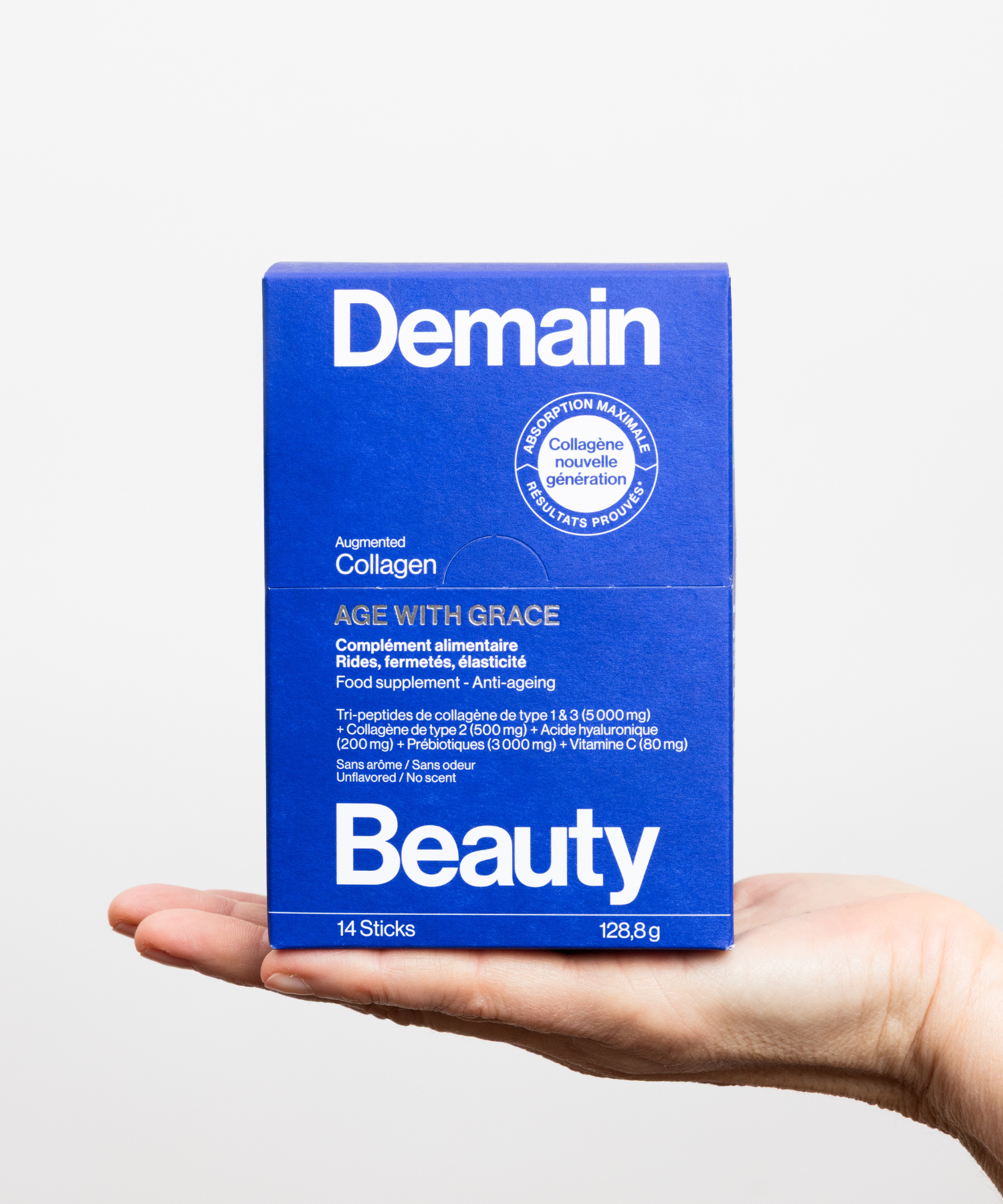
Your skin is made of structural proteins. Without sufficient intake, it loses its firmness: nourish it from within for a visible result. Targeted nutrition preserves the radiance of tired skin, and amino acids support the natural skin barrier. This is the basis of aesthetic longevity. Demain Beauty food supplements support this global approach and reinforce an already colorful plate.
Consult our advice on diet and skin health to find out how much protein per day to favor for your comfort.
Simplify your routine for lasting performance
Don't become a slave to numbers and calculations: consistency beats mathematical perfection. Eat real food, eat organic, and stay calm. A minimalist approach is often the most effective: focus on the quality of active ingredients and avoid ultra-processed products. Your body will appreciate this nutritional clarity. Beauty is a global harmony, and sleep as well as stress management count just as much as your plate.
Your skin's health starts now with your choices. Your vitality depends on a precise adjustment: aim for 0.83g/kg/day, to be adjusted according to your age or sports intensity. Distribute this intake across each meal to protect your muscles and skin radiance. Mastering how many grams of protein to consume per day is the secret to radiant longevity.
FAQ
What is the ideal amount of protein to consume each day?
For a sedentary adult, nutritional science establishes a reference baseline of 0.83g per kilogram of body weight. This generally represents between 10% and 20% of your total energy intake, or about 70 to 100 grams daily to maintain your vital functions and cellular structure. However, this figure is only a safety base: your actual needs fluctuate according to your metabolism and lifestyle. A personalized approach is the key to ensuring lasting vitality and optimal Inside/Out balance.
How to adjust protein intake according to age or situation?
Needs evolve with life cycles. Seniors should aim for 1.0 to 1.2g/kg/day to counteract muscle wasting, while pregnant or breastfeeding women require an extra 10 to 15 grams to support the child's development. It is a matter of strategic nutritional density. For growing teenagers, intake can climb to 1.2g/kg. The goal is to provide the body with the building blocks necessary for its development without ever saturating its elimination functions, and the quality of the sources then becomes the absolute priority.
What dose of protein should be favored to optimize sports performance?
The intensity of your physical activity redefines your metabolic priorities. For endurance disciplines, aim for 1.1 to 1.6g/kg. If your goal is strength or muscle gain, the range rises between 1.6 and 2.2g/kg to repair micro-tears and build muscle fiber. It is crucial not to exceed 2.5g/kg/day in the long term. Rigorous hydration is imperative to accompany this consumption and protect your kidneys. Lasting performance relies on this precise and controlled dosage.
What are the best sources for effective assimilation?
Diversity is the secret to a healthy microbiome. Animal sources (meat, fish, eggs) offer a complete profile of essential amino acids, while plant-based alternatives (legumes, organic cereals) require clever complementarity: combine rice and lentils for maximum effectiveness. Always prioritize the purity of ingredients. High-quality organic sources ensure better bioavailability and limit exposure to chemical residues. It is this demand that sculpts your skin's radiance and your overall energy.
How to identify signs of a protein deficiency?
A deficiency often manifests as persistent fatigue, loss of muscle tone, or brittle appendages (hair and nails). On the cutaneous level, a lack of structural proteins can lead to atrophy and visible loss of firmness. Other signals such as a drop in immunity or mood disorders should alert you. Restoring a balanced intake helps restart neurotransmitter synthesis and restore the natural skin barrier for a radiant complexion.