Key takeaways: Skin laxity depends less on a specific number than on the duration of your tissue distension. While the 30-kilo threshold often marks a structural breaking point, your age and genetics dictate your dermal resilience. Anticipate this transformation with an inside-out approach and consult our guide on skin longevity to take action now.
The dermis's ability to retract varies for every individual, but clinical observations show that a weight loss exceeding 30 kilos often weakens collagen fibers irreversibly. You have put in considerable effort to transform your silhouette, yet the shadow of skin laxity can tarnish this physical victory. We will determine together at what weight loss threshold skin begins to sag and how your genetic background, age, and nutrition influence this resilience. We provide an update on concrete solutions to preserve the firmness of your body envelope during this transformation.
Contents
- At what weight loss threshold does skin actually sag?
- 3 biological factors that dictate the resilience of your dermis
- The impact of transformation speed on skin structure
- The inside-out approach to deeply nourish firmness
- Why muscle strengthening is your best ally
- The limits of natural solutions compared to surgery
- FAQ
At what weight loss threshold does skin actually sag?
Skin laxity becomes visible after 15 to 20 kilos lost, but the critical threshold of irreversibility is often beyond 30 kilos. Initial collagen quality and the duration of being overweight determine the biological retraction capacity of the tissues. You have embarked on a physical transformation and are wondering about how your skin envelope will react to this change.
The biological reality behind weight figures
The number on your scale does not alone dictate your skin's fate. Your genetic heritage and natural elasticity vary considerably from one profile to another. Elastic fibers play a decisive role in this process: dense skin tolerates variations better, but the dermis has physiological limits. To learn more, you can consult our comprehensive guide on skin longevity.
Your resilience depends directly on your initial health capital. Each organism reacts uniquely to weight loss.
Why the 30-kilo mark often signals a turning point
Beyond 30 kilos, a structural rupture often occurs. The support fibers undergo mechanical tension that is too intense, and biological retraction then becomes much more difficult for the tissues. The mechanical saturation of deep tissues is reached, damage to the dermis is frequent after such distension, and the skin loses its precious natural spring.
- Rupture of collagen bridges
- Distension of fascia
- Loss of dermal density
The influence of the duration of excess weight on skin memory
Prolonged distension over several years weakens collagen long-term. Fibers stretch until they lose their integrity, and skin shape memory fades over time. Connective tissue undergoes real mechanical fatigue: the longer the excess weight has persisted, the harder it is for the skin to regain its initial tone.
The duration of skin distension is often more detrimental to firmness than the volume of fat lost itself.
3 biological factors that dictate the resilience of your dermis
Beyond weight, three fundamental biological pillars govern your envelope's ability to keep up with your transformation.
The inevitable impact of age on collagen renewal
From age 30, your body reduces its natural collagen production. Cellular renewal slows down inexorably each year, and your skin becomes less reactive to significant volumetric variations. Mature skin has limited reserves to restructure itself after weight loss: your structural proteins are depleted and require targeted support to maintain tone.
Age directly influences your tissue recovery. Be patient with your body.
The decisive role of genetics in tissue retraction
Your hereditary background defines the initial density of your dermis. Some women benefit from naturally thicker skin, which influences their capacity for spontaneous retraction. Your genes dictate the intrinsic quality of your elastin, and this internal programming explains why two people achieve different results with identical weight loss.
Your genetic heritage defines the framework of your recovery, but your lifestyle habits write the final result.
Regeneration depends largely on this invisible foundation, but it remains possible to influence the levers that you control.
The impact of transformation speed on skin structure
Biology is not the only factor at play: the pace at which you change your body radically modifies the response of your tissues.
The risks of overly rapid weight loss for tissues
Transformation that is too fast deprives your envelope of the necessary adaptation time. This sudden change creates a void under the dermis, and your tissues then lack immediate reactivity. Accelerated deflation leaves the skin without structural support: it sags because it loses its fatty support too quickly, reflecting an asynchrony between volume and envelope.
Speed often harms your firmness. Proceed with caution to protect your silhouette.
Adopting a slow pace to preserve your health capital
Favor a progressive approach to ensure your skin longevity. Losing weight slowly allows your fibers to adjust gradually, and this strategy respects your biological balance. Patience becomes a true tool for beauty here: your body requires long cycles to remodel effectively. Consult our guide on how to tighten stomach skin to support your long-term transformation.
Preventing cellular oxidation during physical change
Intense metabolic variations generate significant cellular oxidation. These rapid changes release free radicals that are particularly aggressive and directly alter the deep structure of the dermis. Select targeted antioxidant nutrients to strengthen your cells: vitamins C and E actively support your skin resilience.
To maintain this integrity, incorporate these essential elements:
- Vitamin C
- Polyphenols
- Selenium
- Zinc
The inside-out approach to deeply nourish firmness
Supporting a structure that has been put to the test requires acting from the inside so that the outside radiates health.
Essential nutrients and synergy with food supplements
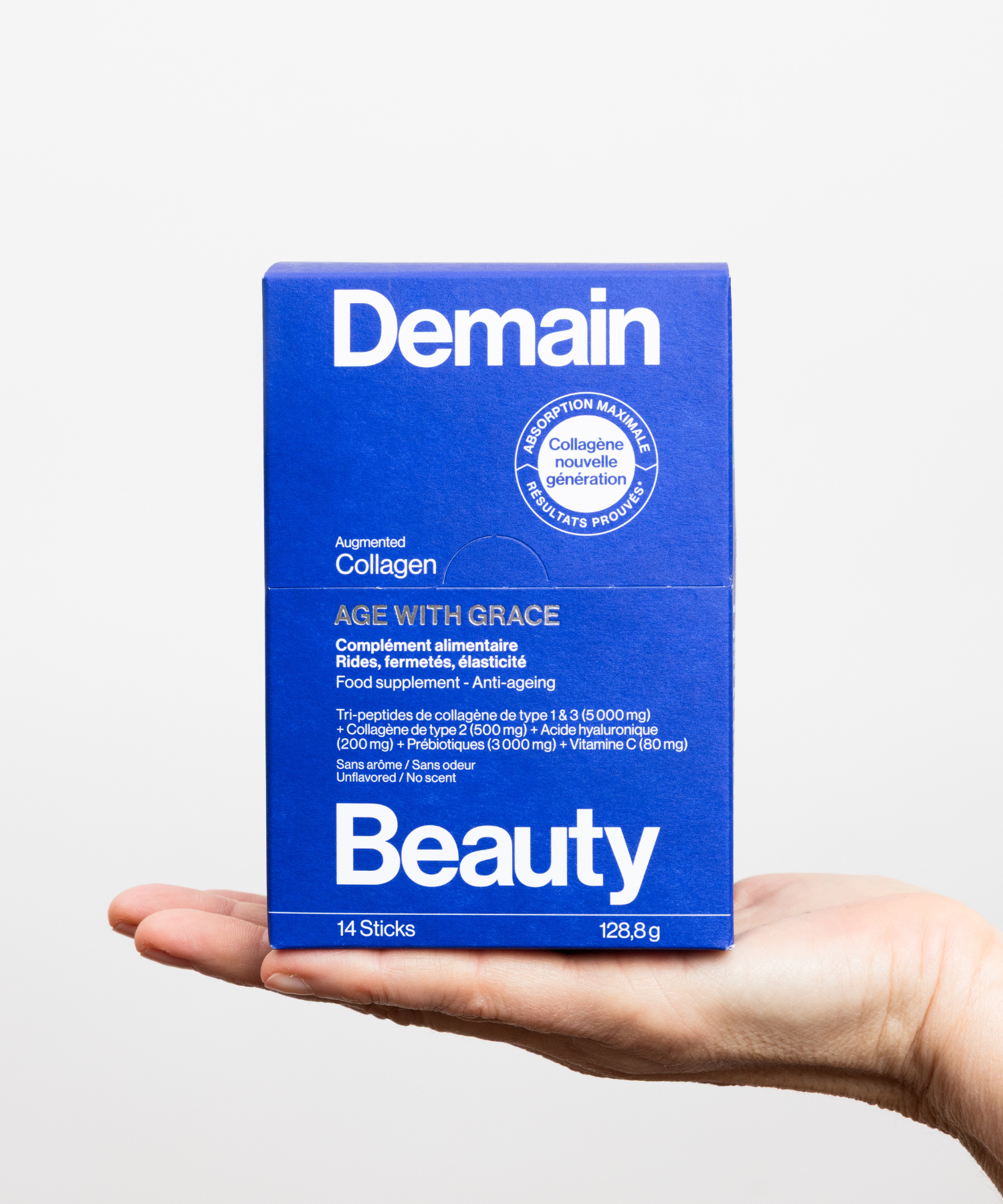
Identifying the necessary amino acids is your first step. Proline and glycine boost protein synthesis and are the building blocks that reconstruct the dermis in depth. Targeted supplementation is of major interest: supplements fill common dietary deficiencies and act where creams cannot reach.
Nutrition is the foundation of your transformation. Nourish your skin from the inside.
Microbiome balance as a foundation for durably strong skin
Linking intestinal health to skin regeneration is fundamental. A balanced microbiome reduces systemic inflammation, which allows for better repair of elastic tissues. Pre- and probiotics offer concrete benefits by durably strengthening the skin barrier. Consult our guide on the benefits of the microbiome for your skin to preserve your balance.
Deep tissue hydration as a pillar of suppleness
Cellular hydration is crucial for elasticity. A water-filled cell maintains skin tension, and suppleness depends directly on this water reserve. Drinking enough remains the basis of all care: water structures the dermis in an irreplaceable way, and topical treatments complement this internal supply.
| Type of hydration | Main action | Firmness benefit |
|---|---|---|
| Internal hydration | Cellular volume | Maintenance of tension |
| Topical care | Protective barrier | Protection of fibers |
| Supplements | Water retention | Lasting suppleness |
Why muscle strengthening is your best ally
Nutrition is not enough: you must also rebuild the framework that supports your skin envelope on a daily basis.
Filling the volumetric void left by fat mass loss
Muscle constitutes the essential foundation of your epidermis. By developing your muscle mass, you replace the lost fat volume, and this new density allows you to mechanically tighten your skin tissues. Toned curves prevent sagging, particularly in the upper limbs, and create an internal mechanical support that structures your new silhouette long-term.
Do not neglect strength training in your routine.
Critical zones and targeted exercises for toning
Concentrate your efforts on the arms and abdominal wall, regions that are primarily affected by gravity. Precise muscle engagement will strengthen the structure of your connective tissues. Favor deep core strengthening and the use of light weights, as the consistency of your practice always outweighs simple occasional intensity. It is time to effectively tone your body with a rigorous routine.
The synergy between physical activity and natural topical care
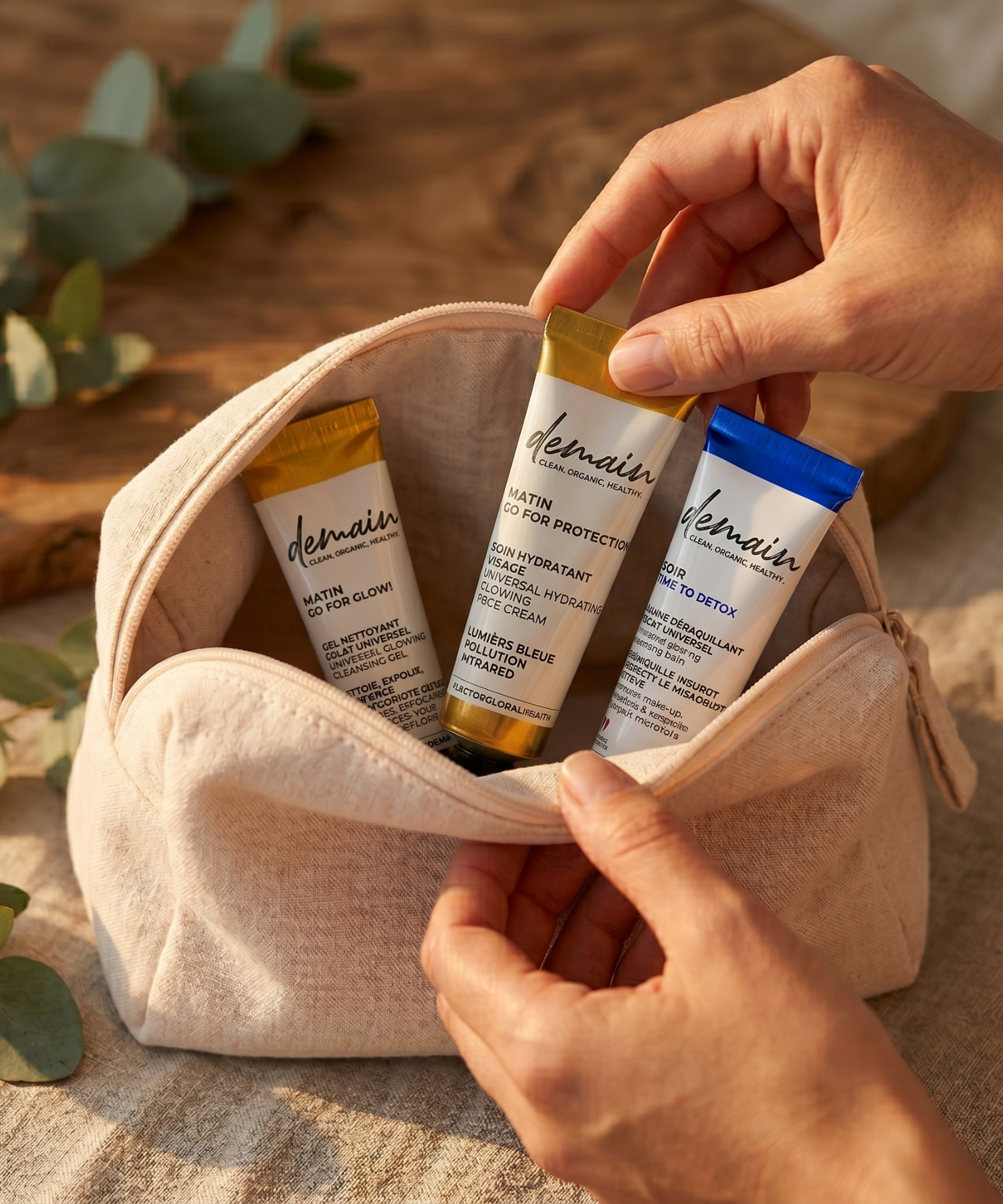
Applying certified organic treatments after your session optimizes recovery. Natural active ingredients activate your blood microcirculation and boost the delivery of essential nutrients directly to the layers of the dermis. Active ingredients from biotechnologies preserve the balance of your skin microbiome during perspiration, perfectly complementing your physical commitment for increased skin longevity.
Physical effort paves the way for better absorption of active ingredients, thus maximizing the impact of your natural treatments.
The limits of natural solutions compared to surgery
While nature offers powerful levers, there comes a time when medical science must take over to repair the extreme.
Evaluating the real effectiveness of minimalist and organic routines
A targeted routine visibly improves skin texture and supports skin longevity on a daily basis. Organic cosmetics offer real recovery capacities for a tired epidermis. Anticipating laxity is more effective than correcting it: natural active ingredients preserve skin health capital long-term and allow for the maintenance of elasticity in the face of moderate weight variations.
Cosmetics have their physical limits. Be realistic about the possible results.
When medical intervention becomes a reconstruction option
Sometimes, the skin is too mechanically damaged and surgery becomes a real functional necessity, particularly during the formation of a significant abdominal apron. Regaining a harmonious silhouette helps to feel better in one's body, and the psychological impact of a body reclaimed is an essential driver of well-being.
Certain situations require more invasive medical expertise:
- Severe abdominal apron
- Significant breast ptosis
- Disabling skin excess
Preserving skin longevity rather than over-correcting
Lasting beauty comes from a global balance. Do not seek immediate and artificial perfection: instead, encourage a holistic vision of your skin health. Simple, repeated actions offer solid results, and the regularity of your routine takes precedence over the accumulation of complex products. To define your specific needs, complete your diagnostic to find your inside/out routine and act today on your youth capital.
Your skin elasticity depends on your genetics, age, and the duration of excess weight, with the 30-kilo mark often marking a structural turning point. Adopt an inside-out approach now, combining targeted nutrition and muscle strengthening to support your transformation. Anticipate to transform your silhouette with firmness and lasting radiance.
FAQ
At what weight loss threshold does skin begin to sag?
There is no universal figure, as each metabolism reacts differently. However, skin laxity often becomes visible after 15 to 20 kilos lost, and can become irreversible beyond 30 kilos, a threshold where support fibers undergo critical tension. Your dermis's ability to retract will depend mainly on how long your skin was distended, your age, and your genetic capital. The longer the excess weight was maintained, the more likely the collagen fibers have lost their initial shape memory.
What are the biological factors that influence skin elasticity?
Your age is a determining factor: after age 30, natural collagen and elastin production slows down, reducing the resilience of your envelope. Genetics also play a major role, dictating the initial density of your dermis and its regenerative capacity in the face of volume variations. External elements like smoking, prolonged sun exposure, and chronic stress act as accelerators of skin aging. These factors degrade structural proteins, making the skin less capable of following your physical transformation.
Does the speed of weight loss systematically cause sagging skin?
Although speed is not the only factor, weight loss that is too brutal creates a sudden volumetric void that the skin does not have time to fill. A progressive approach favors synchronous retraction between fat loss and the adjustment of skin tissues. Adopting a slow pace allows your elastic fibers to adjust gradually. Conversely, lightning-fast weight loss can accentuate the deflation effect, leaving tissues without sufficient mechanical support to maintain their firmness.
How does strength training help limit skin sagging?
Weight training is your best ally for filling the void left by fat loss. By developing your muscle mass, you recreate an internal mechanical support that naturally tightens the tissues, particularly in the arms, abdomen, and thighs. The muscle acts as a framework that restores shape and definition to your silhouette. This toning, combined with deep hydration, helps minimize the sagging appearance of the skin while improving the microcirculation necessary for dermal health.
What are the solutions when natural methods are no longer enough?
When excess skin is too significant, particularly after weight loss exceeding 50 kilos or in the presence of a severe abdominal apron, reconstructive surgery may become a necessary reconstructive option. Procedures such as abdominoplasty or a lift allow for the physical removal of damaged tissue. For more moderate sagging, aesthetic dermatology solutions like radiofrequency or ultrasound can stimulate collagen synthesis. It is advisable to prioritize active prevention through nutrition and targeted skincare before considering more invasive measures.