At menopause, the drop in estrogen accelerates certain mechanisms of skin aging: reduced collagen, dryness, loss of elasticity, and changes in firmness. But the face also changes profoundly, in terms of fat volumes, bone, and supporting structures. Understanding these changes makes it possible to adopt a more suitable skincare routine, without trying to erase the years.
Some women feel they no longer recognize their face in just a few months. The cheeks seem hollower, the eye contour more pronounced, the skin thinner, and the complexion less radiant.
This change can be surprising, especially if you have long had comfortable, unblemished skin.
Yet, there is a biological explanation for these transformations.
And above all, there are simple steps to support this new stage of life.
Table of Contents
- Why does the face age faster at menopause?
- The four facial structures that change with age
- How to take care of your skin at menopause?
- Collagen after 50: is it useful for the skin?
- A beauty routine adapted to skin after 50
- Does hormone replacement therapy for menopause slow down skin aging?
- The other pillars of skin longevity
- Frequently asked questions about skin and menopause
- Aging well means, above all, taking care of your skin
Why does the face age faster at menopause?
The answer lies largely in estrogen, hormones that play an important role in skin health.
Skin is an organ dependent on hormones. It has estrogen receptors, particularly in fibroblasts, the cells responsible for producing collagen and elastin.
These two proteins contribute to the skin's structure, strength, and elasticity.
As early as perimenopause, hormonal fluctuations can gradually alter this balance. At menopause, the sustained drop in estrogen promotes several changes:
- A reduction in collagen content.
- A loss of firmness and elasticity.
- A decrease in skin hydration.
- Thinner and sometimes more sensitive skin.
- More visible wrinkles and fine lines.
Some studies have estimated that skin collagen content can decrease by around 30% in the first five years after menopause. This is a rough estimate, which varies depending on women and measurement methods.
But collagen alone does not explain the evolution of the face.
The four facial structures that change with age
The face is not simply a layer of skin. It rests on a complex architecture, several elements of which change over time.
1. Skin: loss of density, dryness, and wrinkles
The drop in estrogen can affect the skin's ability to retain its hydration and suppleness.
The dermis gradually becomes less dense, while collagen and elastin fibers change.
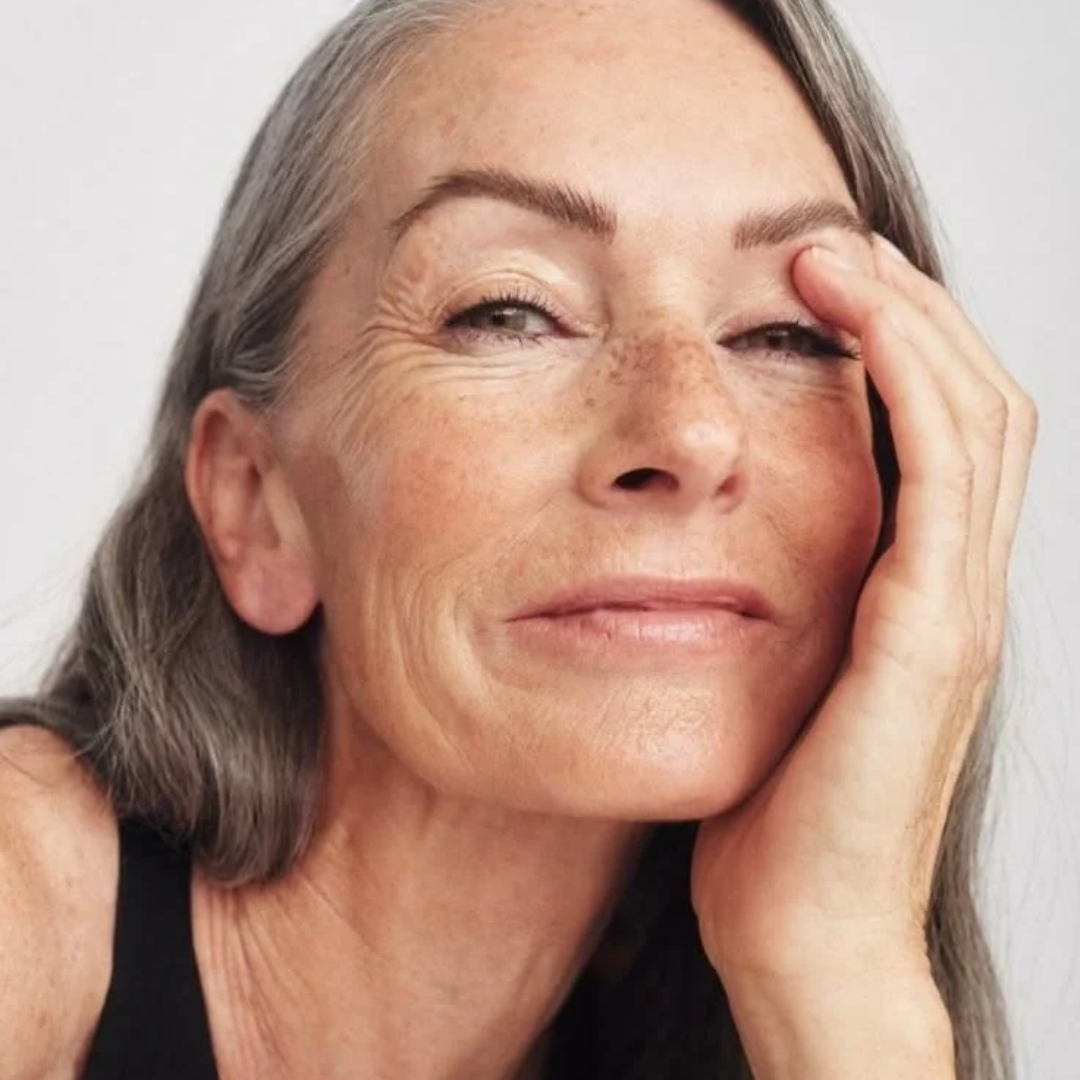
The skin can then appear thinner, more wrinkled, particularly on the cheeks, neck, and around the eyes.
Some women also discover skin dryness they had never experienced before.
This is why moisturizing, nourishing, and protective skincare becomes particularly important at this time.
2. Fat compartments: hollower cheeks and a less defined jawline
Facial fat is distributed in different compartments, superficial and deep.
With age, some of these compartments can lose volume, particularly at the level of the cheekbones and around the eyes.
Others change differently and contribute to the modification of the facial oval.
This explains why it is possible to have hollower cheeks and a less defined lower face at the same time.
A cream cannot replenish these deep volumes, but it can improve the quality and appearance of the skin covering them.
3. Bone: a changing architecture
The facial skeleton also changes over the course of life.
Certain bony areas, particularly around the eye sockets, cheekbones, and jaw, undergo gradual changes.
These changes can contribute to accentuating the appearance of hollows and altering the contours of the face.
The drop in estrogen also plays a role in overall bone loss after menopause. However, changes in the facial skeleton are complex and do not depend solely on hormones.
4. Ligaments: the facial support points
Support ligaments help maintain the tissues of the face.
Over time, their function and their relationship with other structures change.
Associated with changes in the skin, fat volumes, and bones, these transformations contribute to the visible sagging of the contours.
To remember: facial aging is a global phenomenon. No cosmetic treatment can act on all these structures, but a suitable routine can significantly improve comfort and certain visible signs of skin aging.
How to take care of your skin at menopause?
The right strategy is not necessarily to use more products.
It is above all about selecting skincare adapted to the skin's new needs: hydration, nourishment, protection, and improvement of visible signs of aging.
1. Rely on a targeted anti-aging serum for wrinkles and firmness
Over time, the skin gradually loses part of its suppleness and density.
Skincare containing hydrating and smoothing active ingredients can help improve its appearance, particularly by reducing the visibility of dehydration fine lines.
Hyaluronic acid is particularly interesting for helping to maintain hydration and providing a plumping effect on the skin's surface.
Some active ingredients derived from marine biotechnology are also being studied for their cosmetic interest in the appearance of firmness and elasticity.
Our answer DEMAIN®

Its certified organic, 100% natural-origin biphasic formula combines hyaluronic acid of different molecular weights, an active ingredient derived from marine plankton, and prebiotic and postbiotic ingredients.
It targets the main visible signs of skin aging: wrinkles, loss of firmness, dehydration, and lack of radiance.
The goal is not to change the facial features, but to help the skin maintain a smoother, more supple, and more radiant appearance.
2. Nourish the skin and preserve its skin barrier
At menopause, the skin can become drier, more reactive, and less comfortable.
The skin barrier plays an essential role: it helps limit water loss and protects the skin from external aggressions.
Humectant ingredients, such as glycerin and hyaluronic acid, attract and retain water.
Lipids, on the other hand, help preserve suppleness and reduce sensations of tightness.
Well-hydrated skin generally appears more supple, and dehydration fine lines are less visible.
This is why a routine adapted to mature skin must seek a balance between hydration and nourishment.
3. Discover plant-based retinol to support visible signs of aging
Retinoids, derivatives of vitamin A, are among the best-studied active ingredients for improving signs of photoaging.
But some formulas can be irritating, particularly on skin that has become drier or more sensitive.
Plant cosmetology is also exploring so-called retinol-like active ingredients, which are not chemically identical to retinol, but are used for their interest in the appearance of signs of aging.
Among them, criste marine, a coastal plant, holds an interesting place in natural cosmetology.
Our answer DEMAIN®
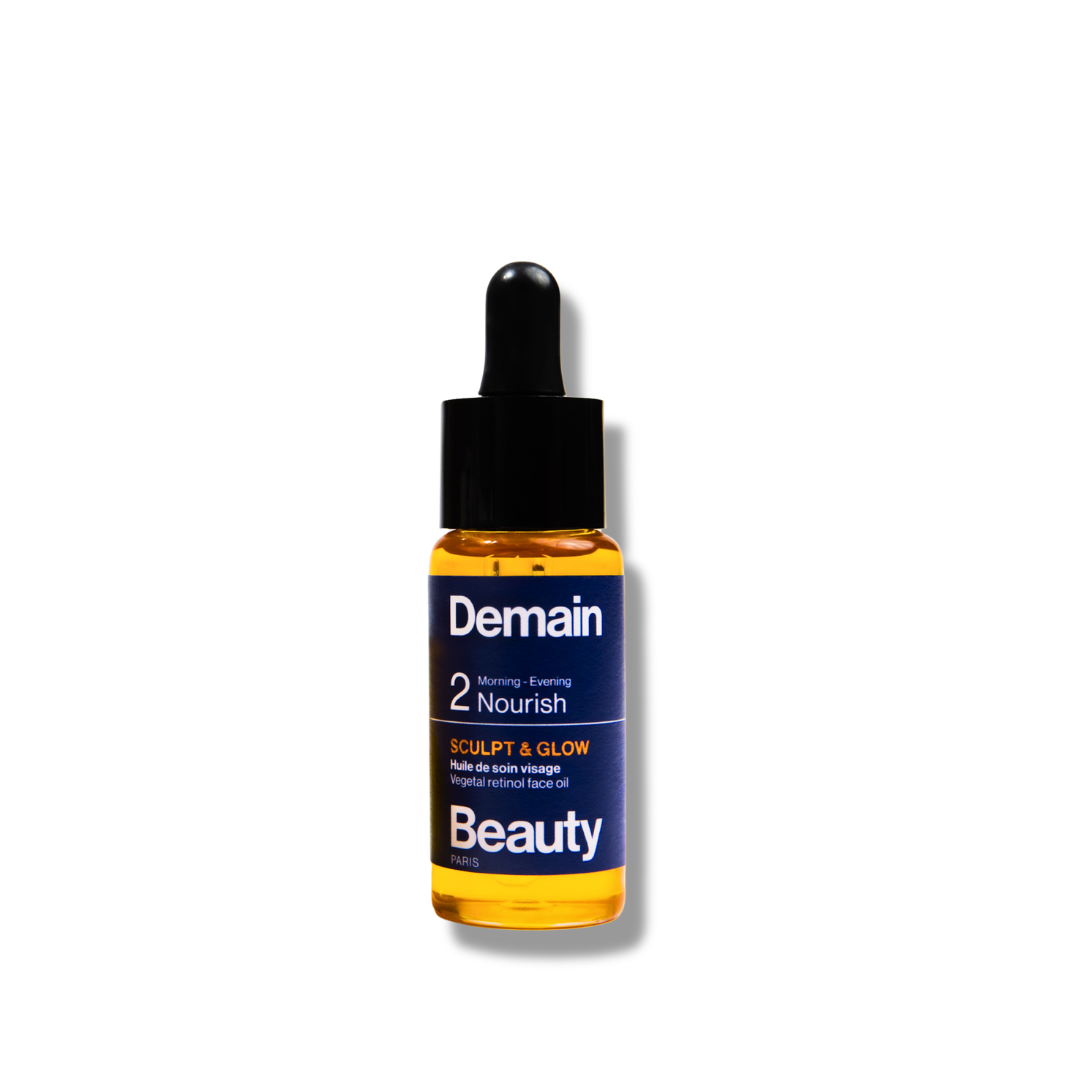
Its formula combines a retinol-like plant active with nourishing oils, to support the appearance of firmness, suppleness, and radiance.
Particularly interesting when the skin lacks comfort, it can also be incorporated into a facial self-massage ritual.
A few gentle steps make the application a relaxing moment, without claiming to restore fat volumes or reposition deep structures.
4. Protect your skin from the sun all year round
Ultraviolet rays are a major factor in premature skin aging.
They notably promote the appearance of wrinkles, dark spots, and the degradation of certain dermis structures.
Regular use of a broad-spectrum sunscreen, adapted to exposure, is one of the best-documented measures to preserve skin quality.
At menopause, this prevention remains fundamental.
5. Respect the balance of the skin microbiome
The skin houses a complex ecosystem of microorganisms: the skin microbiome.
It interacts with the skin barrier and helps maintain its balance.
When the skin becomes drier or more sensitive, it is particularly important to favor gentle skincare, limit aggressive cleansing, and preserve skin comfort.
Prebiotics and certain ingredients derived from fermentation are used in cosmetology with this perspective, even if their effectiveness must always be evaluated on a per-formula basis.
At DEMAIN BEAUTY, this approach has been part of our philosophy from the beginning: taking care of the skin as a living ecosystem.
Collagen after 50: is it useful for the skin?
Collagen is one of the main structural proteins of the dermis.
Its gradual decrease contributes to the loss of skin firmness and elasticity.
But can we act from within with supplementation?
Hydrolyzed collagen peptides have been the subject of several clinical studies. Some report improvements in hydration and elasticity after several weeks of daily intake.
These results are encouraging, but the effects vary depending on the formulations and studies. The available evidence does not allow all collagen supplements to be considered equivalent.
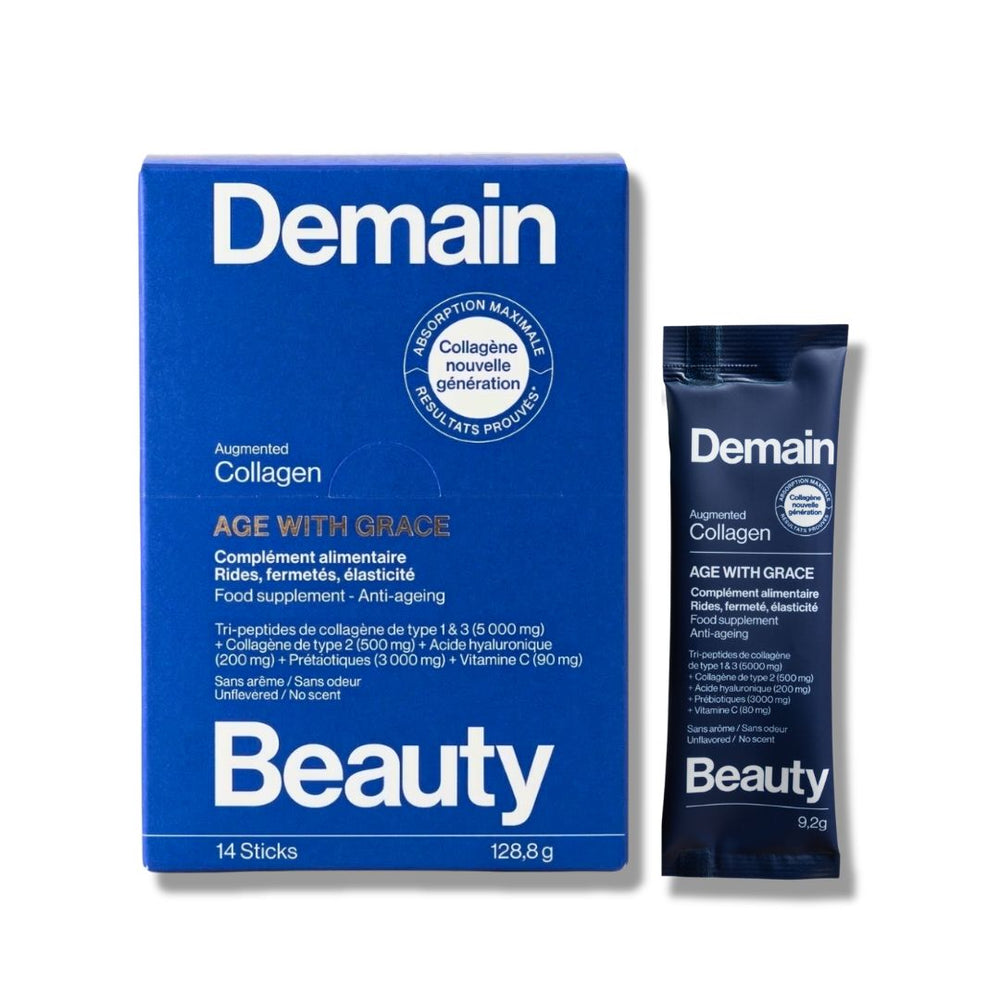
Age With Grace: the new generation of collagen according to DEMAIN
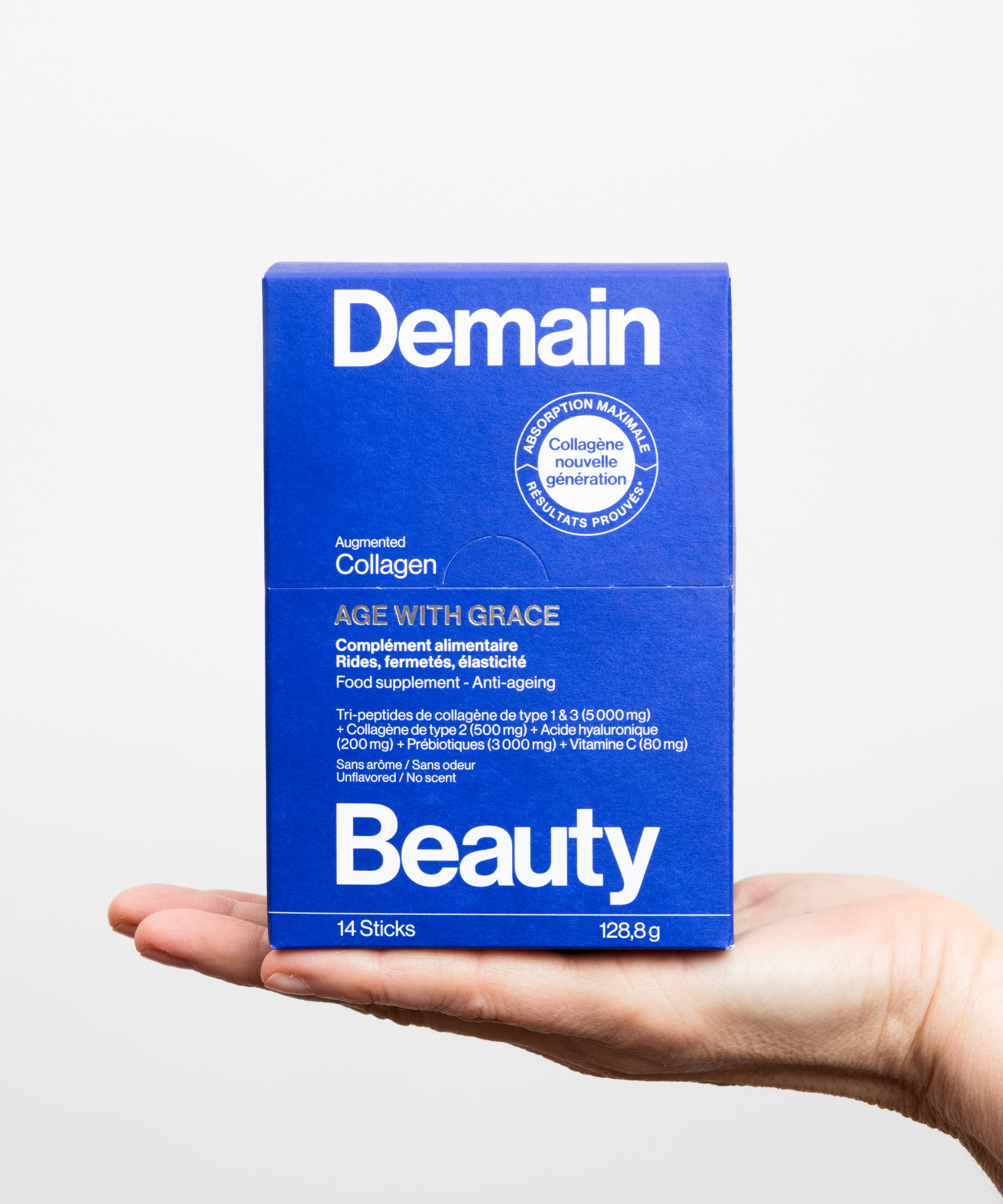
Because skin quality also depends on nutritional factors, we developed AGE WITH GRACE, our marine collagen dietary supplement.
Its formula combines, per dose:
- 5,000 mg of marine collagen tripeptides of types I and III.
- 500 mg of type II marine collagen.
- 200 mg of hyaluronic acid.
- 80 mg of vitamin C.
- 3,000 mg of chicory inulin.
Vitamin C contributes to the normal formation of collagen necessary for the normal functioning of the skin.
This formula is part of our vision of Inside & Out beauty, which combines cosmetic skincare and nutrition.
However, supplementation does not replace a balanced diet, sun protection, or daily skincare.
A beauty routine adapted to skin after 50
It is not necessary to multiply the steps to take care of mature skin.
The essential thing is to build a regular, pleasant routine adapted to your skin tolerance.
In the morning:
- Gently cleanse the skin, if necessary.
- Apply a few drops of the Happy Age serum.
- Complete with a suitable moisturizer.
- Finish with a broad-spectrum sunscreen.
In the evening:
- Remove makeup and cleanse the skin without aggressing it.
- Apply Happy Age to support visible signs of aging.
- Add a few drops of Sculpt & Glow according to nourishment and comfort needs.
- Take a few moments for a gentle self-massage, if desired.
From within:
Age With Grace can complete this routine, respecting its directions for use and within the framework of a varied and balanced diet.
The most important thing remains regularity: a simple, adapted routine followed over time is often preferable to an accumulation of skincare products.
Does hormone replacement therapy for menopause slow down skin aging?
Estrogens play an important role in skin physiology.
Some studies have observed beneficial effects of hormone replacement therapy for menopause on various skin parameters.
However, this treatment is not primarily indicated to prevent wrinkles or rejuvenate the face.
Its prescription depends on the symptoms, expected benefits, and individual risks. It should always be discussed with a healthcare professional.
It is neither an aesthetic treatment nor a solution capable of restoring all facial structures.
The other pillars of skin longevity
Skin beauty does not depend solely on cosmetics.
It also reflects lifestyle habits that influence overall health.
A varied diet, providing sufficient protein and micronutrients, contributes to the normal functioning of the body.
Sleep contributes to overall recovery.
Physical activity, especially muscle strengthening, is particularly important during menopause to preserve muscle mass and bone health.
Finally, avoiding tobacco and limiting excessive sun exposure are two major steps for skin health and quality.
Skin longevity therefore begins far beyond the bathroom.
Frequently asked questions about skin and menopause
Why does my skin suddenly age during menopause?
The drop in estrogen changes skin hydration, collagen, and elasticity. These changes can make signs of aging that were already developing gradually more visible.
Why does the face hollow out after 50?
Facial fat volumes and bone structures change with age. These changes can accentuate hollows in the cheeks and around the eyes. They are not solely linked to menopause.
What is the best anti-aging routine after 50?
An effective routine is first based on regular sun protection, appropriate hydration, skincare targeting visible signs of aging, and well-tolerated products. It must be personalized according to the skin's condition.
Is plant-based retinol as effective as conventional retinol?
Not necessarily. So-called retinol-like plant actives may offer cosmetic benefits, but they are not identical to retinoids and do not all have the same level of evidence.
Is drinkable collagen useful during menopause?
Some studies suggest modest benefits of hydrolyzed collagen peptides on skin hydration and elasticity. Results depend on the formulation and are not guaranteed for everyone.
Can skin become firmer after menopause?
Appropriate skincare can improve hydration, suppleness, and the appearance of firmness. However, it cannot restore fat volumes or bone structures that change with age.
Aging well means above all taking care of your skin
Menopause is not simply a period when the skin changes. It is a biological transition that invites us to better understand its needs.
Rather than trying to erase the years, we at DEMAIN BEAUTY believe in a different vision of beauty: preserving skin quality, respecting its balance, and intelligently supporting its evolution.
Skin longevity does not consist of stopping time.
It consists of giving the skin the best conditions to remain healthy, comfortable, and radiant at every age.
Because beautiful skin is above all healthy skin.
Choose Longevity.
This article was notably inspired by the explanations of Dr. Myriam Sacchetti, an aesthetic doctor specializing in micronutrition, in her video dedicated to facial changes around menopause.
Discover the original video on YouTube.
DEMAIN BEAUTY offers here its own educational take on the subject, in a global approach to health and skin longevity.