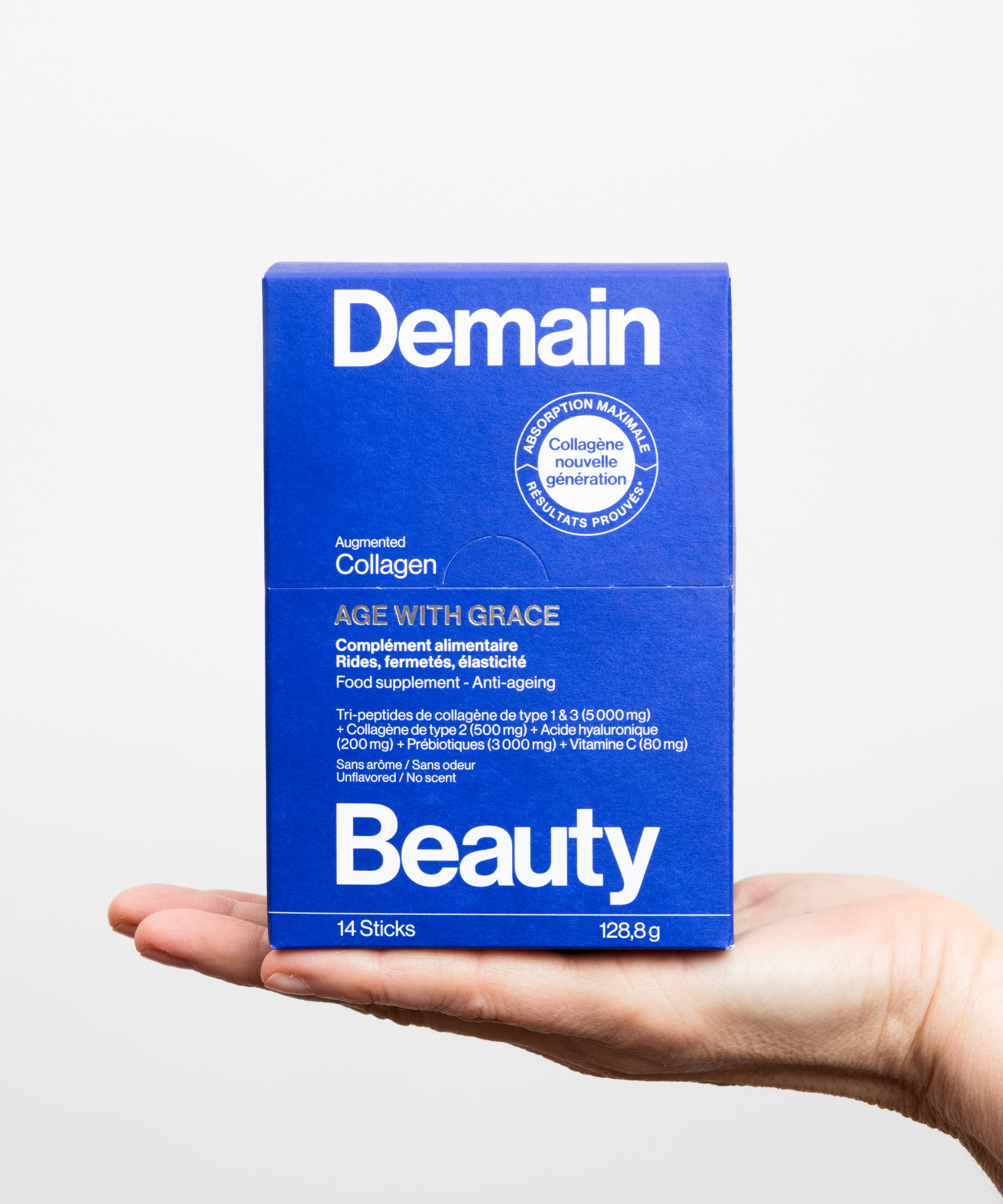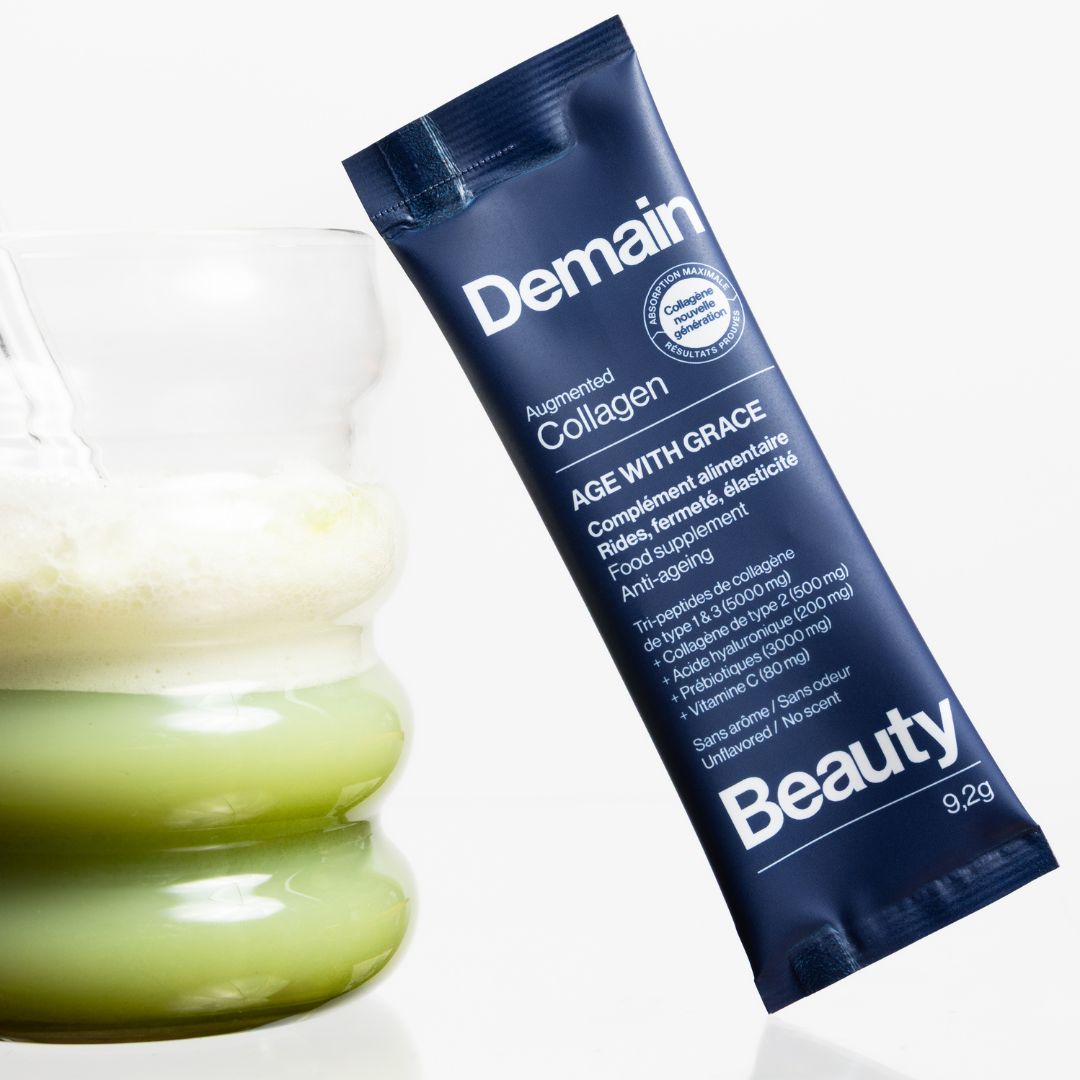
Key takeaways: Menopause reduces collagen in the skin, making it drier, less supple, and less firm. Collagen applied in a cream or serum mainly works on the surface: it retains water and provides temporary comfort, without replacing lost collagen. Data on collagen supplements in menopausal women remain limited, and their results are inconsistent.
Upon waking, the skin feels tight and the complexion appears less clear. Between menopause and collagen, advice is multiplying. This article sorts through what works on the skin and what collagen can provide.
Table of Contents
Why the skin changes at menopause
Dryness, wrinkles, and loss of firmness
With menopause, the skin becomes drier, thins, and loses suppleness. Wrinkles deepen and the face oval sags, a phenomenon linked to skin aging after 50. This can be surprising if you do not expect it.
These changes do not affect all women in the same way. They depend on several factors:
- genetics
- sun exposure
- smoking
- diet
- skincare habits
Collagen is the protein that provides the skin with its structure and firmness. Elastin gives it elasticity, that is, its ability to regain its shape after movement or stretching. When these two elements weaken, sagging and creases become more visible.
A change linked to hormones
The drop in estrogen affects several skin functions at once. The skin retains water less effectively, produces less sebum and loses some of its suppleness. It then reacts more quickly to tightness and sensations of discomfort.
The decline in collagen is particularly marked in the years following menopause, then continues more gradually. To understand this phenomenon, it is the time elapsed since menopause that counts, much more than chronological age.
Cosmetic care prioritizes comfort and hydration
A short routine to retain water
The first lever is to correct dryness and tightness. Cleanse your face with a gentle formula. Avoid water that is too hot. Then apply your moisturizer to skin that is still slightly damp. This routine only takes a few minutes, provided it is applied every day.
- Tight skin: opt for a rich cream, applied morning and evening, and repeat the gesture on the most uncomfortable areas.
- Sensitive skin: limit aggressive cleansing, frequent exfoliation, and the stacking of irritating active ingredients.
Cosmetic collagen mainly works on the surface
Applied in a cream or serum, collagen mainly works on the surface of the skin. It forms a film that retains water. This can temporarily improve softness, comfort, and the smoothed appearance. It does not replace lost skin collagen.
Collagen supplements require careful reading
Numerous studies, but inconsistent results
Collagen-based supplements generally contain hydrolyzed collagen, broken down into peptides, short chains of amino acids. Trials most often involve daily intake spread over several weeks, or even several months.
The work mainly looks at hydration, elasticity, texture, and the appearance of wrinkles. The results remain variable: they depend on the formulation, the duration of the study, the measured criteria, and the quality of the trials. Data specific to menopausal women remain, to date, limited.
Choose well and check the label
A supplement is not judged by the mention "collagen" alone. Check the origin and the daily amount. Also look at the hydrolyzed or peptide form, the full list of ingredients, and the conditions of use. Marine collagen is problematic in the event of a fish allergy. Collagen of bovine or porcine origin comes from other animal sources.
- Origin of collagen: fish, bovine, or pork depending on the raw material. Check allergens and your dietary choices.
- Hydrolyzed collagen: peptides obtained by breaking down collagen. This form does not guarantee a skin result.
- Amount per day: the intake actually intended by the label. Compare the total amount, not just the weight of the packet.
- Other ingredients: vitamin C, flavorings, sweeteners, or various combinations. Avoid multiple intakes of the same ingredient.
- Traceability: manufacturer, batch, and conditions of use. Favor a controlled sales channel.
A dietary supplement can cause digestive disorders, skin reactions, or an allergy. Ask a healthcare professional for advice if you already take several products, if you have a known allergy, or if a reaction appears after intake.
When to seek medical advice
Mild dryness that improves with a gentle routine is often a common discomfort. However, medical advice is required if the dryness persists despite skincare, or if it is accompanied by redness, a rash, cracks, or itching that disrupts your sleep.
Consult a doctor quickly if a lesion changes appearance, bleeds, forms a persistent scab, or does not disappear. These signs are not enough to establish the cause, but they justify an evaluation by a doctor or dermatologist.
Depending on the situation, several professionals can intervene:
- General practitioner: they perform an initial examination and guide the next steps of management.
- Dermatologist: they evaluate persistent or unusual skin changes.
- Gynecologist: they can address the other manifestations of menopause and the options adapted to your case.
Cosmetics and supplements do not replace this evaluation. As soon as a sign is out of the ordinary, consult. Before considering a supplement, first establish the routine that you will maintain every day: gentle cleansing, then moisturizer applied to skin that is still slightly damp. A few minutes are enough, and it is this regularity that will allow you to appreciate your comfort.
FAQ
Is marine collagen preferable to bovine collagen?
No origin is clearly preferable for the skin: the right choice depends on your situation. Check allergens, traceability, and your dietary preferences. If you are allergic to fish, marine collagen should be excluded.
Does plant-based collagen exist?
No, collagen itself is by definition of animal origin. Products presented as "plant-based collagen" mainly contain ingredients that provide amino acids. Read the list of ingredients before buying.
Can menopause also change the skin on the body?
Yes, like that of the face, the skin on the body can become drier, rougher, and less supple. The legs, arms, and hands are particularly affected. A short shower, a gentle cleanser, and a cream applied right after washing improve comfort.