Key takeaways: The skin is a multifunctional vital organ that covers an average of 2 m² and provides physical protection, active thermoregulation, and vitamin D synthesis. This biological shield preserves homeostasis through a complex microbiome and a 28-day cell renewal cycle. A holistic inside/out approach, combining nutrition and topical care, ensures this organ's resilience against UV damage and oxidative stress.
With an average surface area of 2 square meters and a mass between 4 and 10 kilograms in adults, the skin is the human body's largest organ. However, whether the skin truly qualifies as an organ—a complete system—is still a subject of inquiry. This article analyzes the vital functions of the cutaneous structure to confirm its role as a protective and regulatory organ, and provides you with the keys to caring for it long-term.
Table of contents
Biological status of a vital organ
The skin is the body's heaviest organ, accounting for 16% of total weight. It provides waterproof protection via the epidermis and structural resistance thanks to the dermis, ensuring vital homeostasis.
Epidermal architecture and protection
The stratum corneum is your physical bulwark. It acts as a selective barrier against the environment and continuously blocks external aggressions. The keratinization process transforms living cells into corneocytes, which migrate toward the surface to harden this shield. This structure guarantees total waterproofing for the organism and prevents excessive internal water loss.
Dermal structure and resistance
Connective tissue has high density and contains essential capillaries that irrigate skin tissues, as confirmed by the Encyclopédie Universalis. The dermis provides mechanical support and acts as a mattress for the epidermis, with its robust extracellular matrix stabilizing the entire structure. Collagen and elastin are its key components: they guarantee skin strength and suppleness.
Hypodermis depth and insulation
Adipocytes store fat and constitute a vital energy reserve that supports the entire body's metabolism. The hypodermis acts as a shock absorber: it protects internal organs from mechanical impact and regulates temperature through thermal insulation. This deep zone also anchors the skin to the muscles, allowing for fluid body mobility.
Physiological survival functions
Beyond its architecture, this organ carries out regulatory missions essential to our immediate survival.
Physical barrier against external aggressions
The skin blocks bacteria and urban pollutants: its protective film stops pathogens and preserves daily health. It protects against mechanical shock and limits the effects of abrasions. According to the Larousse médical, it isolates internal structures and prevents vessel injury. Without this envelope, organs would be directly exposed to a hostile environment that would destroy biological balance.
Thermoregulation and body homeostasis
Sweating dissipates heat through evaporation: sweat glands activate during physical exertion to maintain internal temperature.
The skin contains between 2 and 5 million sweat glands essential for dissipating excess heat.
Cutaneous vasomotor activity constantly adjusts blood flow: vessels dilate to cool the body and constrict to conserve energy. This system maintains the body at 37°C by compensating for external thermal variations, which stabilizes metabolism.
Sensory and immune interface
The skin is not just a passive shield: it acts as a center for communication and active defense.
Perception and nerve endings
The cutaneous envelope identifies external stimuli thanks to specialized receptors that detect touch, pressure, and pain signals. The nervous system decodes this precise information transmitted by specific sensors:
- Meissner's corpuscles for light touch
- Pacinian corpuscles for pressure
- Thermoreceptors for heat and cold
This sensitivity ensures immediate reactivity to potential burns or any other physical aggression.
Langerhans cells and active defense
Langerhans cells act as sentinels that patrol the epidermis non-stop. Their mission is to detect any foreign intrusion: they capture enemy antigens and present them to the immune system. This cellular dialogue activates lymphocytes and ensures the organism's resilience against daily biological aggressions.
Dermo-epidermal junction and cohesion
This interface zone manages nutrient exchange: the dermis nourishes the superficial epidermis via diffusion, which is vital because the epidermis lacks its own vessels. The junction also provides indispensable mechanical resistance by maintaining cohesion between skin layers and resisting friction forces. A solid junction stabilizes the skin structure and contributes to a visibly firm complexion.
Cutaneous microbiome ecosystem
To understand the overall health of this organ, we must look at the microscopic life that inhabits it permanently.
Microbial flora and health balance
Billions of microorganisms live in symbiosis with skin cells and protect the skin's long-term health capital. Microbial competition ensures epidermal security: healthy flora occupies the available space and prevents harmful germs from taking hold. You can consult our complete guide on the microbiome to understand how to have beautiful skin. Postbiotics derived from this flora act as shields and strengthen the epidermis's defenses naturally.
Impact of pH on bacterial survival
The skin's natural acidity preserves its ecosystem: the hydrolipidic film maintains a pH of 5.5, which favors beneficial bacteria and blocks the proliferation of pathogens that prefer neutral environments. Disruption of this pH causes real damage: an alkaline environment destabilizes the entire balance and generates dryness, irritation, and inflammation.
Resilience against pollution and stress
Stress weakens the protective barrier: cortisol directly degrades the microbiome and makes the skin more vulnerable. Resident bacteria fight urban oxidation by neutralizing free radicals from pollution. Learn what cortisol is and how to manage it to better protect your face. Prebiotics nourish positive flora and ensure optimal long-term resilience.
Regeneration and longevity mechanisms
The skin possesses a fascinating capacity for self-repair, but this precious capital inevitably declines over time.
Cell renewal and healing
The keratinocyte cycle lasts 28 days in adults: these cells migrate from the basal layer to the surface, a process documented by work published on Cairn.info. In the event of a lesion, cells activate immediately and migrate to close the wound, reconstructing tissue to restore the protective barrier. This autonomous regeneration slows with age: healing becomes slower and the overall efficiency of the cutaneous organ gradually decreases.
Fibroblasts, collagen, and elastin
Fibroblasts are the fundamental cells of the dermis: they act as specialized factories and produce the structural collagen and elastin that keep the skin firm and supple. Current biotechnologies make it possible to stimulate cellular vitality and prolong skin youthfulness long-term.
| Component | Primary role | Impact on longevity |
|---|---|---|
| Collagen | Structure | Mechanical resistance and support |
| Elastin | Suppleness | Extensibility and elastic recoil |
| Hyaluronic acid | Hydration | Volume and skin bounce |
Natural aging and fiber deterioration
The network of supporting fibers degrades over time: structures fragment and the initial organization of the dermis loses its coherence. Metabolism slows down under the influence of the biological clock, production of essential lipids drops, and the synthesis of structural proteins decreases. Loss of density becomes a visible marker: the appearance of fine lines signals functional decline and reveals the increasing fragility of the organ.
Holistic strategy and inside/out approach
Maintaining cutaneous integrity requires a bidirectional approach. Optimizing barrier health depends on internal and external synergy, and you must adopt a unified vision to preserve this complex organ.
Synergy between nutrition and skin health
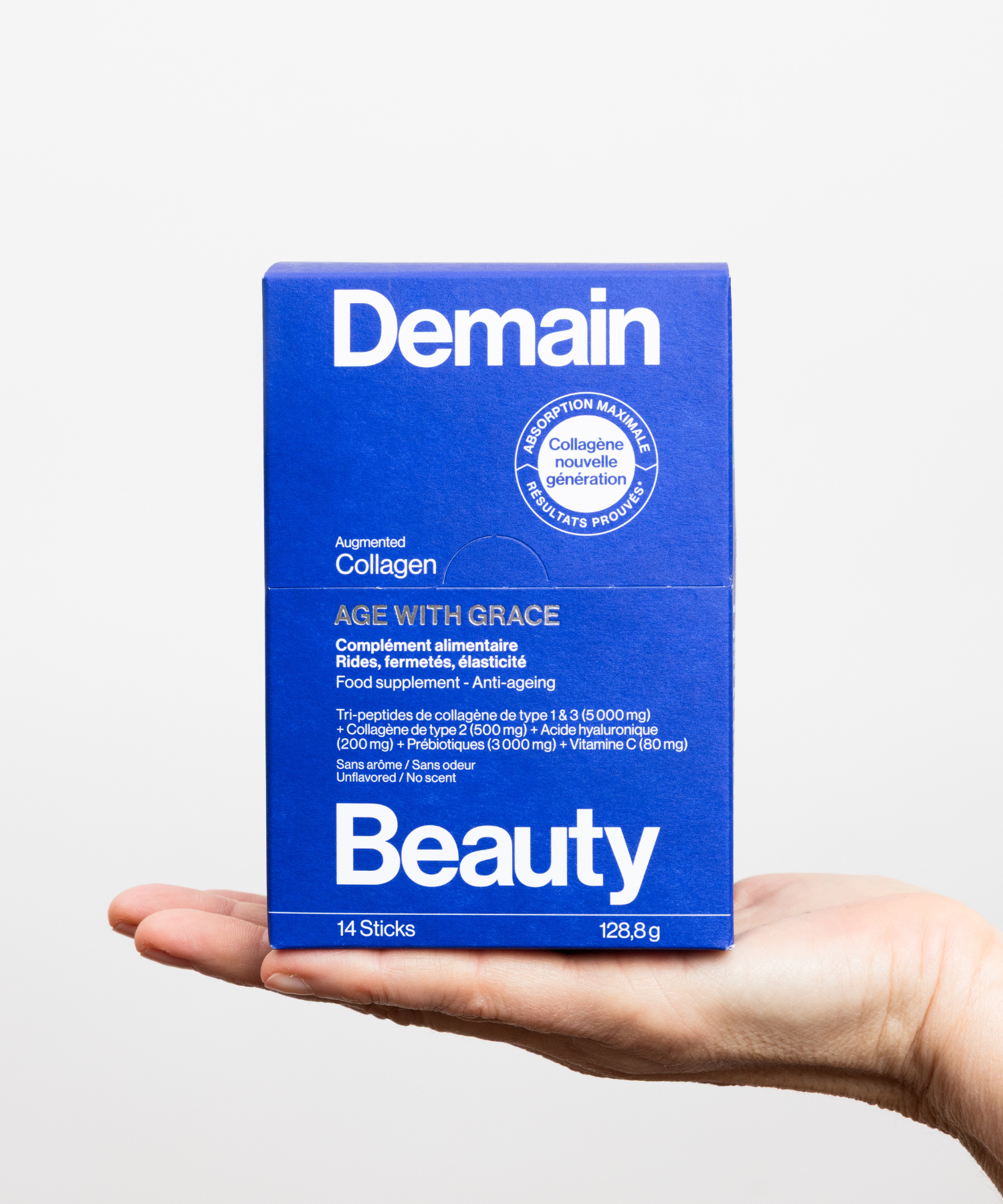
The gut-skin axis regulates tissue homeostasis: a balanced gut microbiome modulates systemic inflammation, and your complexion's clarity directly reflects the health of the digestive microbiota. Targeted nutrient intake strengthens biological defenses, and food supplements compensate for epidermal structural deficiencies. Our beauty and health ally optimizes essential protein intake to preserve elasticity through specific supplementation. The combined action of nutrients and topical care multiplies efficacy and maximizes results for skin longevity.
Routine minimalism and organ integrity
The accumulation of chemicals saturates skin receptors, and the multiplication of products alters natural self-regulation functions, risking disruption of the hydrolipidic barrier through overload. Respecting physiology requires refined and effective formulations: targeted treatments support cellular metabolism without aggression. The skin maintains its functional balance through minimalism, and a short routine preserves health capital long-term.
Preventing premature aging and UV damage
Ultraviolet rays induce breaks in cellular DNA: photoaging accelerates the degradation of tissue collagen and elastin, causing tissue sagging following chronic solar exposure. Our article on the dangers of the sun for the skin details the risks of deep oxidation. Applying broad-spectrum protection blocks free radicals, and wearing protective clothing completes the strategy. Anticipating solar risks ensures the skin's future resilience and preserves tissue beauty over the long term.
The skin is indeed a vital organ in its own right: barrier protection, thermoregulation, and vitamin D synthesis make it an irreplaceable physiological system. Maintaining the integrity of this barrier requires a holistic inside/out approach, which combines microbiome-friendly topical care with targeted nutrition. Taking care of your skin today means preserving your health capital for years to come.
FAQ
Is the skin an organ?
Its biological status is confirmed: the skin is indeed an organ. It covers an average surface area of 2 square meters and its total mass in an adult is between 4 and 10 kilograms. Its complex structure is broken down into three layers: the epidermis, dermis, and hypodermis. It is the largest organ of the human body, with multiple vital functions: physical protection, thermoregulation, vitamin D synthesis, and sensory perception. The homeostasis it maintains is essential for survival.
What are the skin's main functions?
The skin is an active physical barrier that protects against impact, pollution, microbes, and UV rays, while preserving internal organs, muscles, nerves, and blood vessels. It regulates temperature via perspiration and vasomotor activity, and synthesizes vitamin D. It also plays an immune interface role through Langerhans cells and allows for sensory perception of pain, touch, and temperature.
How does the skin regulate temperature?
The eccrine sweating mechanism dissipates excess heat via sweat glands and maintains the target internal temperature at 37 degrees Celsius. Vasomotor adjustment completes this system: vasodilation increases blood flow at the surface to cool the organism, while vasoconstriction limits heat loss and conserves heat for vital organs. These two mechanisms function continuously and in a coordinated manner.
What is the role of cutaneous vitamin D?
Vitamin D synthesis is photochemical and relies on UVB: these transform 7-dehydrocholesterol into vitamin D3, an essential process for bone health and optimal mineral density. This production also strengthens the immune system and protects against respiratory infections and inflammation. It participates in the regulation of immune cell differentiation.
What is the cutaneous microbiome?
The cutaneous microbiome is a symbiotic microbial ecosystem composed of billions of microorganisms (bacteria, viruses, and fungi) that form a biological barrier against opportunistic pathogens. It maintains the physiological acidic pH at 5.5, which protects the skin's health capital. It also ensures the skin's resilience against pollution and oxidative stress.
How does the skin regenerate?
The keratinization cycle lasts 28 days: keratinocytes migrate from the basal layer to the stratum corneum and are then eliminated via natural desquamation. In the event of injury, the skin activates its healing capacity in successive phases: hemostasis, inflammation, proliferation, and remodeling. Collagen and elastin synthesis via dermal fibroblasts is central to this reconstruction process.
What are the effects of the sun on the skin?
UV rays attack cellular DNA and cause accelerated photoaging: loss of density, appearance of fine lines, and degradation of supporting fibers (collagen and elastin). Pathological risks include skin cancers and melanomas. Daily sun protection with an appropriate SPF is necessary to prevent oxidation and alteration of the skin barrier.